In India
Can Avocado Grow in India? An Honest Answer
Avocado grows in India, and has for decades in a few specific places. The honest answer is regional, and depends far more on drainage and heat than on latitude.
5 min read
The general advice needs translating for Indian conditions. Monsoon drainage and summer heat are the two things that decide whether your tree makes it.
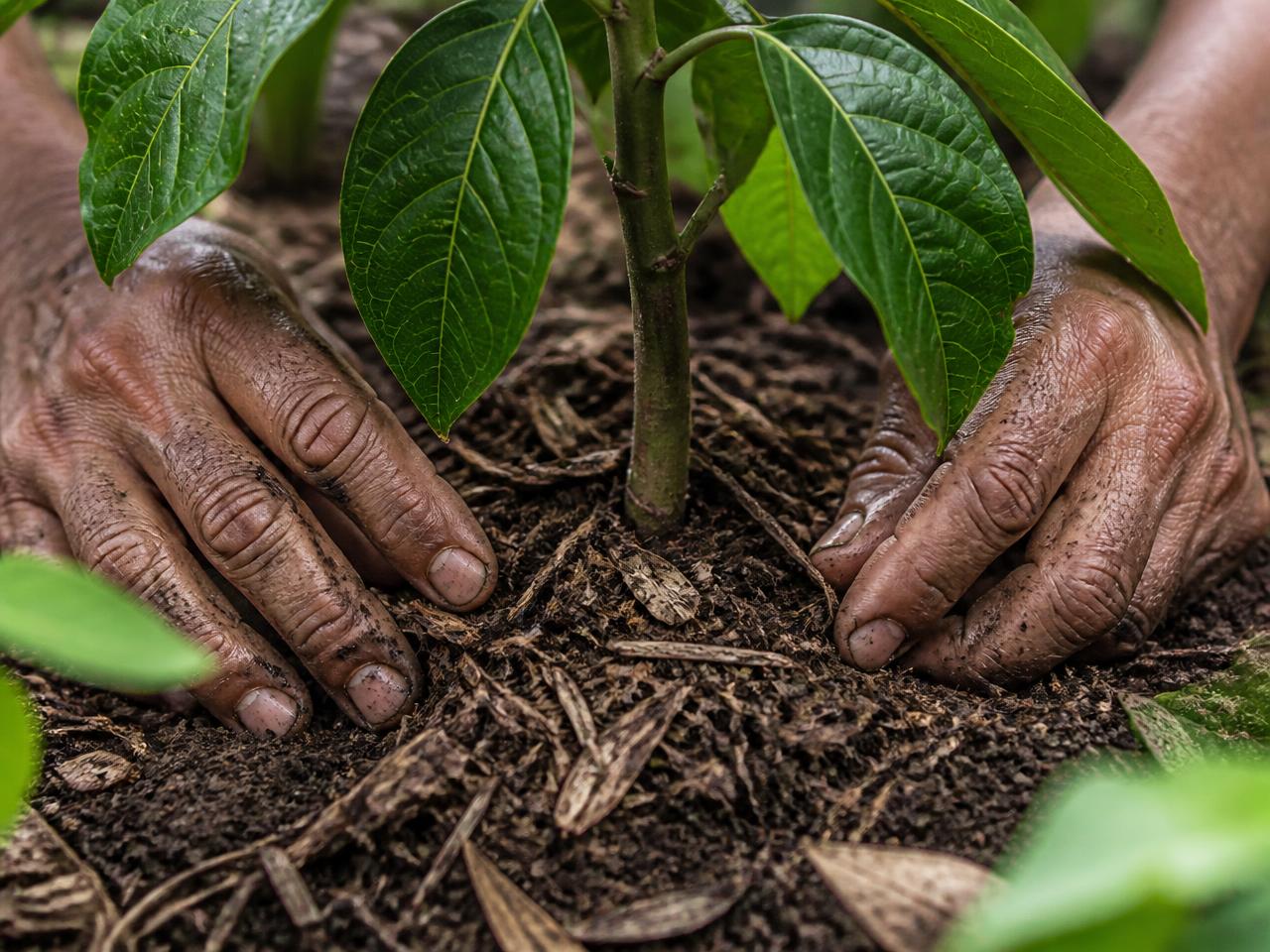
Most avocado advice online is written for California or Australia. The horticulture transfers; the calendar and the risks do not. Here is the version that accounts for monsoon, Indian summer heat and typical urban growing conditions.
Not a pit from the kitchen. Grafted trees fruit years sooner and produce fruit true to the named variety. This is the single decision that most determines whether you eventually get avocados. Full explanation here.
Unless you have sloping, free-draining land, grow in a container. It is not a compromise — it is the sensible default for Indian urban conditions, because it puts drainage entirely under your control.
Container setup
The most common mistake we see
A beautiful large pot with one blocked drainage hole, sitting flat on a terrace. The tree looks fine for two months and then collapses after the first heavy rain week.
Six or more hours of direct sun is the target, but in most of India a young tree does better with strong morning sun and relief from the fiercest afternoon load. As the tree matures its own canopy shades the root zone and it handles more.
Shade the pot as much as the leaves. A dark container in direct afternoon sun heats the root ball far beyond what the roots tolerate.
| Season | Priority | What to do |
|---|---|---|
| Late winter to spring | Growth | Main growth flush period. Water steadily, feed lightly, do any planned pruning before the heat arrives. |
| Peak summer | Survival | Water more often and check daily in a container. Shade the pot. Mulch heavily. Expect the tree to slow down — that is normal. |
| Monsoon | Drainage | Stop watering unless there is a dry spell. Clear drainage holes. Move pots under cover if water pools. This is the root-rot window. |
| Post-monsoon | Recovery | Resume normal watering. A growth flush often follows. Watch for fungal leaf spotting after long wet stretches. |
| Cool season | Protection | Water less. In the north, protect young trees from cold nights — a sheltered position or temporary cover. |
Late winter to spring
Peak summer
Monsoon
Post-monsoon
Cool season
Two rules cover almost everything. Water deeply and then let the surface dry slightly before watering again. And never let water sit around the roots — which, in monsoon, means the job flips entirely from watering to drainage.
Water quality is worth checking. Avocado is unusually salt-sensitive, and in areas with hard or saline borewell water, salts build up in a container's root zone and burn leaf tips. Occasional heavy flushing helps; a different water source helps more.
UC Riverside recommends mulching avocado, and UC ANR notes that shallow feeder roots recycle nutrients from decomposing leaf litter. In Indian summer, mulch also does real work moderating root-zone temperature. Do not sweep away fallen avocado leaves — that is free mulch and free feeding.
Avocado is not a heavy feeder in the ground, but a container leaches nutrients with every watering. Feed modestly during growth flushes rather than heavily at any one time, and never feed a stressed or newly moved tree.
Growth in flushes, not steadily. A quiet or sulky period in peak summer. Real acceleration after monsoon. Fruit years away rather than months. If something looks wrong along the way, our troubleshooting guides cover the common causes.
If you would rather start with a tree that has already cleared its most fragile years at a partner farm, that is the whole point of what we do.
Avoid planting into peak summer heat or the wettest part of monsoon. The cooler, settled periods either side give the tree a chance to establish roots before it faces an extreme.
Check by finger daily for a container tree in peak summer — it may need water every day or two. Water deeply each time rather than a small amount often, and shade the pot to slow drying.
Usually not, except in dry spells. The monsoon job is drainage, not irrigation: keep drainage holes clear, never let water pool at the base, and move containers under cover in prolonged heavy rain.
Only if it drains freely. Heavy clay and flat ground that holds water after rain will eventually cause root rot. Where drainage is doubtful, grow in a container with a coarse medium or plant on a raised mound.
Horticultural and nutritional claims on this page are drawn from these references.
We write from two places: published horticultural research from institutions such as ICAR-IIHR and the University of California, and what our partner farms actually observe growing avocado in Indian conditions. Where the evidence is thin or regional, we say so instead of rounding it into a confident answer.
Researched and written in-house, reviewed by our farm coordination team. Last reviewed 3 September 2026.
Our Knowledge Hub covers growing, care, varieties, grafting and fruiting in one place — and if you would rather start with an established tree, we can tell you honestly whether one will do well where you live.
Free calculators that turn this guide into a result for your own conditions.
See whether your local climate is suitable, workable or challenging.
Score your light, soil, drainage and watering, and see what to change first.
Model investment, running cost, yield and margin across three scenarios.
In India
Avocado grows in India, and has for decades in a few specific places. The honest answer is regional, and depends far more on drainage and heat than on latitude.
5 min read
In India
Three seasons, three completely different jobs. Summer is about heat, monsoon is about drainage, winter is about cold. Confusing them is how trees die.
3 min read
Varieties
There is no single best variety for India, because India is not one climate. What matters is racial background, cold tolerance and how the tree handles your specific conditions.
4 min readStart here
Care
Where the browning starts tells you the cause. Tips and margins point to salt; whole-leaf browning points elsewhere entirely.
3 min read