In India
How to Grow an Avocado Tree in India: Practical Guide
The general advice needs translating for Indian conditions. Monsoon drainage and summer heat are the two things that decide whether your tree makes it.
4 min read
Avocado grows in India, and has for decades in a few specific places. The honest answer is regional, and depends far more on drainage and heat than on latitude.
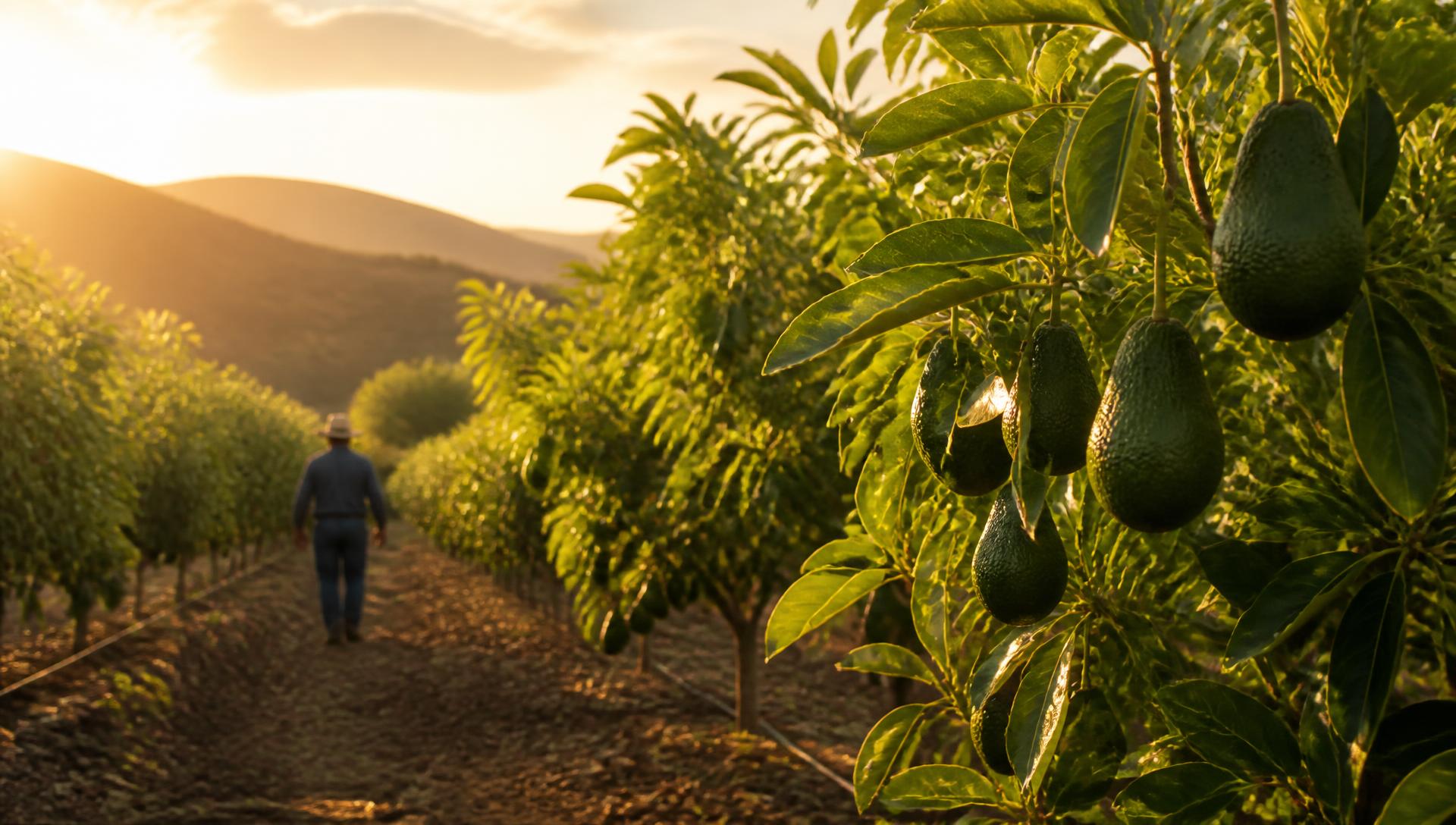
The honest answer has three layers: yes commercially, in a handful of well-suited regions; yes at home in a container, across a much wider area; and no, realistically, in the hottest and driest parts of the country without significant intervention.
Avocado is not new here. It has been grown in parts of southern India for a long time, and the strongest documentation points to the cooler uplands of the Western Ghats.
| Region | Status | Notes |
|---|---|---|
| Kodagu (Coorg), Karnataka | Best established | The most consistently documented avocado area in India. ICAR's Central Horticultural Experiment Station at Chettalli sits here and has driven much of the country's avocado work. |
| Wayanad and the Kerala high ranges | Well established | Cool upland conditions with reliable rainfall. Avocado is a familiar homestead and mixed-plantation tree here. |
| The Nilgiris and hill districts, Tamil Nadu | Active, less scale data | Suitable upland climate and real cultivation, but less documented commercial scale than Kodagu or Wayanad. |
| Himachal Pradesh and other hill states | Emerging / development stage | Genuine interest and trial planting rather than established commercial production. Treat claims of established orchards here with caution. |
Kodagu (Coorg), Karnataka
Wayanad and the Kerala high ranges
The Nilgiris and hill districts, Tamil Nadu
Himachal Pradesh and other hill states
What we will not claim
You will see confident lists online naming many Indian states as avocado-producing. We have not found sufficient independent evidence to present Maharashtra, Sikkim or the Northeast as established commercial avocado regions, so we do not say so. Interest and trials are not the same as production.
Avocado comes from the humid subtropics, not the tropical lowlands and not the temperate zone. The Ghats uplands reproduce that middle ground: warm but not scorching, humid, with real rainfall and — critically — sloping ground that drains.
That last point matters more than the temperature. UC IPM identifies Phytophthora cinnamomi root rot as avocado's most serious disease, thriving in wet, poorly drained soils. A hillside in Kodagu drains. A flat plot in a monsoon-heavy plain does not.
| Limit | Why it matters | Can you work around it? |
|---|---|---|
| Waterlogging | Root rot in saturated soil is the leading killer | Yes — raised planting, slopes, or containers with genuine drainage |
| Extreme dry heat | Sustained very high temperatures with low humidity stress the tree and drop flowers and fruit | Partly — shade for young trees, mulch, consistent water. Difficult in the hottest arid zones |
| Winter cold in the far north | Cold tolerance varies by race; Mexican-race varieties are hardiest, West Indian the most tender | Partly — variety choice and winter protection for container trees |
| Saline irrigation water | Avocado is unusually salt-sensitive; salts accumulate and burn leaf tips | Sometimes — better water source, leaching irrigation, container medium |
| Hard, compacted soil | Shallow feeder roots need aeration | Yes — containers sidestep this entirely |
Waterlogging
Extreme dry heat
Winter cold in the far north
Saline irrigation water
Hard, compacted soil
These are different questions and people constantly conflate them. A commercial orchard needs a climate that produces reliable yields year after year without heroic intervention. A single container tree on a terrace needs only a spot with sun and drainage, and a person who pays attention.
That is why home avocado works in far more of India than commercial avocado does. In a container you control the medium, the drainage and the position — which removes the two hardest constraints at once.
The practical test for your home
Six or more hours of direct sun, somewhere water can drain freely away, and shelter from constant hard wind. If you have those three, an avocado has a real chance where you live.
ICAR-IIHR has carried out avocado improvement work and released selections including Arka Coorg Ravi and Arka Supreme. This matters because varieties selected under Indian conditions have been evaluated somewhere resembling where you will grow them, rather than in California.
Hass, Fuerte, Pinkerton and other international varieties are also present in India. Which one suits you depends heavily on your climate — our variety guide for Indian conditions works through the trade-offs.
India imports a substantial and growing quantity of avocado. World Bank WITS data records Indian avocado imports of roughly 9.22 million kg, worth about USD 22.4 million, in 2024. That is a meaningful market being met largely from abroad, which is exactly why domestic cultivation interest keeps climbing.
Figures for Indian avocado imports differ noticeably between sources and years. We cite the World Bank WITS 2024 figure and date-stamp it rather than quoting a growth percentage we cannot reconcile.
For state-level detail, see our avocado farming guides. For growing at home in Indian conditions specifically, read how to grow avocado in India.
Yes. The best-documented cultivation is in the cooler Western Ghats uplands — especially Kodagu in Karnataka and Wayanad in Kerala — with active growing in the Tamil Nadu hills and emerging interest in Himachal Pradesh. Home container growing works across a much wider area.
In a container, with care, often yes — the tree needs shade for its pot in peak summer, consistent water and free drainage. Sustained extreme dry heat is genuinely hard on avocado, so expect more work than in a cooler upland climate.
Karnataka, and specifically Kodagu (Coorg), is the most consistently documented avocado region in India, alongside the Wayanad area of Kerala. We avoid publishing precise state production figures because reliable independent data is limited.
Yes. ICAR-IIHR has released selections including Arka Coorg Ravi and Arka Supreme, developed through avocado improvement work in India.
Drainage. Avocado's shallow roots rot in saturated soil, and monsoon waterlogging is the most common cause of death here. Heat stress in the plains and salinity in irrigation water come next.
Horticultural and nutritional claims on this page are drawn from these references.
We write from two places: published horticultural research from institutions such as ICAR-IIHR and the University of California, and what our partner farms actually observe growing avocado in Indian conditions. Where the evidence is thin or regional, we say so instead of rounding it into a confident answer.
Researched and written in-house, reviewed by our farm coordination team. Last reviewed 3 September 2026.
Our Knowledge Hub covers growing, care, varieties, grafting and fruiting in one place — and if you would rather start with an established tree, we can tell you honestly whether one will do well where you live.
Free calculators that turn this guide into a result for your own conditions.
See whether your local climate is suitable, workable or challenging.
Model investment, running cost, yield and margin across three scenarios.
Score your light, soil, drainage and watering, and see what to change first.
In India
The general advice needs translating for Indian conditions. Monsoon drainage and summer heat are the two things that decide whether your tree makes it.
4 min read
In India
A careful, evidence-led look at where avocado actually does well in India — and an equally careful note about the regions widely claimed without support.
3 min read
Varieties
There is no single best variety for India, because India is not one climate. What matters is racial background, cold tolerance and how the tree handles your specific conditions.
4 min readStart here
In India
Three seasons, three completely different jobs. Summer is about heat, monsoon is about drainage, winter is about cold. Confusing them is how trees die.
3 min read