Varieties
Hass vs Fuerte Avocado: Which Should You Grow?
Hass won the world market. Fuerte held it first, and still has advantages that matter in cooler conditions. Here is the real comparison.
3 min read
There is no single best variety for India, because India is not one climate. What matters is racial background, cold tolerance and how the tree handles your specific conditions.
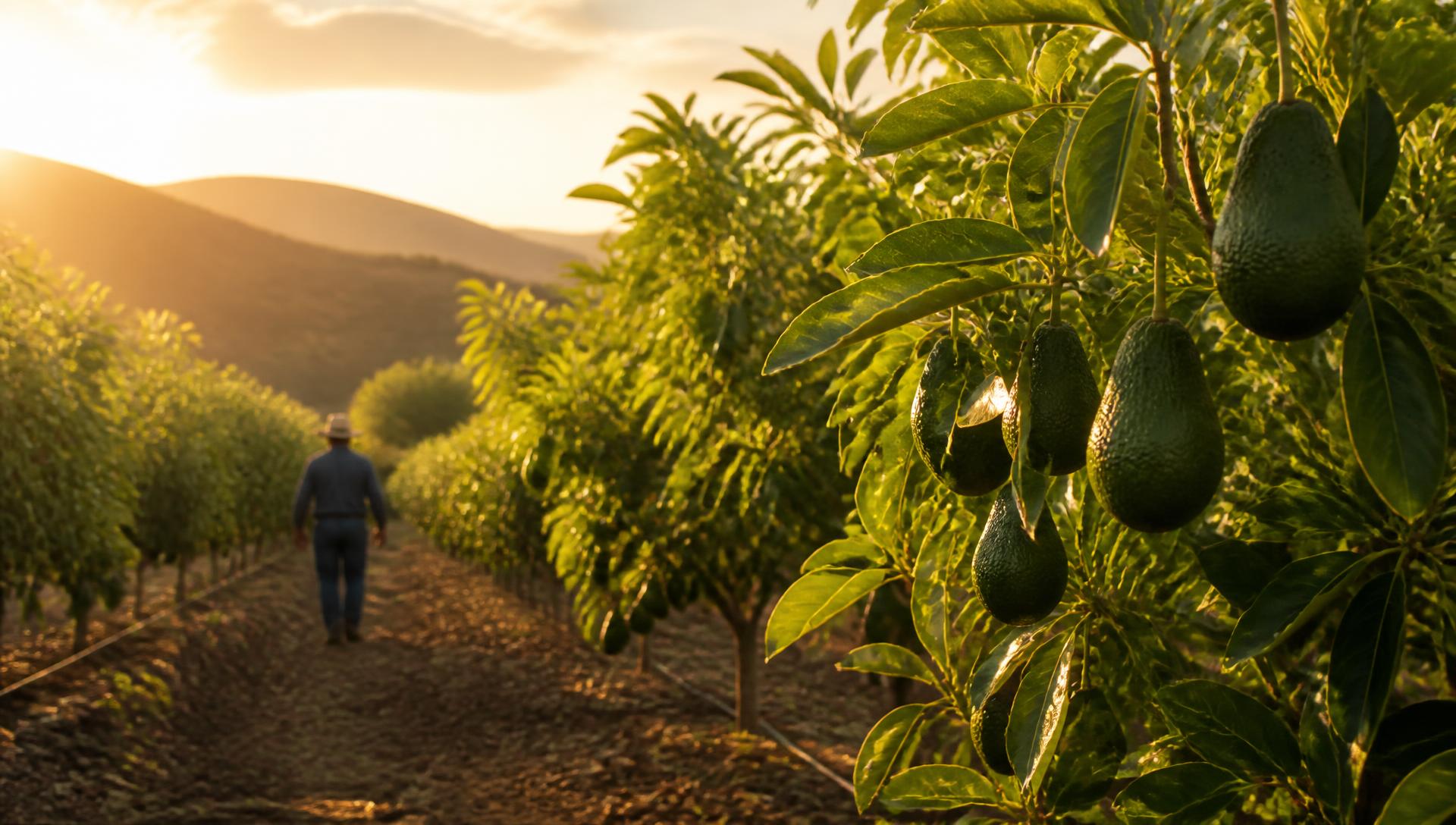
Asking for the best avocado variety for India is a bit like asking for the best crop for Europe. The country runs from Ladakh to Kerala. What you actually want is the variety that fits your climate, your space and what you intend to do with the fruit.
Every avocado variety descends from one of three ecological races, or a hybrid of them, and this predicts more about behaviour than any individual variety trait.
| Race | Cold tolerance | Heat and humidity | Typical fruit |
|---|---|---|---|
| Mexican | Highest | Less suited to humid lowland tropics | Smaller fruit, thin skin, often high oil content |
| Guatemalan | Intermediate | Intermediate | Thicker, often rougher skin; good keeping quality |
| West Indian | Lowest — the most frost-tender | Best suited to hot, humid lowlands | Large, smooth-skinned, lower oil, milder flavour |
Mexican
Guatemalan
West Indian
The quick heuristic
Cold winters or hill conditions push you towards Mexican-race genetics. Hot, humid coastal lowlands push you towards West Indian. Most of the famous named varieties, including Hass, sit somewhere in between.
Avocado flowers open twice — once functionally female, once functionally male — on a daily schedule. UC Riverside's explanation of this pattern splits varieties into Type A and Type B according to the timing.
The practical implications are widely overstated. Planting an A and a B near each other can improve fruit set. But single trees do fruit, and if you are growing one tree on a balcony you should not agonise over this. Flowering type matters at orchard scale far more than at home.
The commercial standard worldwide and the fruit most people picture: pebbly skin that darkens as it ripens, rich flesh, excellent keeping and shipping qualities. Guatemalan-dominant, Type A. Its darkening skin is a genuinely useful ripeness cue, which is part of why it took over global retail. It is grown in India, but its popularity reflects market economics as much as climatic fit.
The variety Hass displaced. Mexican–Guatemalan hybrid, Type B, with smooth green skin that stays green when ripe. Historically valued for flavour and for greater cold tolerance than Hass, which makes it relevant in cooler upland conditions. The green skin means ripeness has to be judged by feel rather than colour. Full comparison with Hass.
Type A, elongated pear shape, small seed relative to flesh — which means a good flesh-to-seed ratio, one of the practical things that actually matters when you cut one open.
Type A, distinctively round with thick green skin, and a summer-maturing variety. Notable for producing large fruit and for a tree habit that tends more upright than spreading — worth knowing if space is constrained.
A Hass-type variety with similar dark pebbly skin, generally later-maturing, and known for a more upright, compact tree habit than Hass. That habit is the interesting part for confined spaces.
ICAR-IIHR has undertaken avocado improvement work and released these selections. Their significance is that they were evaluated under Indian conditions rather than imported wholesale from a different climate. We are not going to publish specific oil content, flowering type or fruit size figures for them, because we have not been able to verify those details from a primary source.
Why we are cautious with variety specifics
Variety data circulates widely online with numbers that drift between repostings. Where we could not confirm a figure against a horticultural source, we describe the characteristic qualitatively instead of inventing precision.
| Your situation | What to prioritise |
|---|---|
| Cool hills, cold winters | Mexican-race genetics for cold tolerance. Fuerte's cooler-climate reputation is relevant here. |
| Hot, humid coastal lowland | West Indian influence handles heat and humidity best. |
| Balcony or small terrace | Tree habit above all — a naturally upright, compact variety beats annual hard pruning. |
| Want familiar fruit | Hass, if your climate supports it. It is the taste and texture most people expect. |
| Want the easiest ripeness call | Hass — the skin darkens as it ripens. Green-skinned varieties must be judged by feel. |
| Growing in India, want local suitability | Ask about ICAR selections, which were evaluated in Indian conditions. |
Cool hills, cold winters
Hot, humid coastal lowland
Balcony or small terrace
Want familiar fruit
Want the easiest ripeness call
Growing in India, want local suitability
For a home tree, availability is a real constraint. Our range reflects what partner farms grow well in their own conditions, because a variety a farmer can actually raise to health beats a theoretically ideal variety that struggles at the farm. Tell us your city and space and we will tell you what is realistically available for you.
There is no single answer, because India spans many climates. Cool hill areas favour Mexican-race genetics for cold tolerance; hot humid lowlands favour West Indian influence. ICAR-IIHR selections such as Arka Coorg Ravi and Arka Supreme were evaluated under Indian conditions.
Hass is grown in India, particularly in suitable upland areas. Its worldwide dominance reflects shipping and shelf-life advantages as much as growing ease, so it is not automatically the best choice for every Indian location.
It refers to the daily timing of the flower's female and male phases. Pairing a Type A with a Type B can improve fruit set, but single trees of either type do set fruit on their own.
Prioritise a naturally upright, compact tree habit over fruit prestige. Lamb Hass, for example, is known for a more upright habit than Hass. Whatever the variety, the container's drainage matters more than the name on the label.
Horticultural and nutritional claims on this page are drawn from these references.
We write from two places: published horticultural research from institutions such as ICAR-IIHR and the University of California, and what our partner farms actually observe growing avocado in Indian conditions. Where the evidence is thin or regional, we say so instead of rounding it into a confident answer.
Researched and written in-house, reviewed by our farm coordination team. Last reviewed 3 September 2026.
Our Knowledge Hub covers growing, care, varieties, grafting and fruiting in one place — and if you would rather start with an established tree, we can tell you honestly whether one will do well where you live.
Free calculators that turn this guide into a result for your own conditions.
A short quiz that shortlists varieties suited to your climate and goal.
See whether your local climate is suitable, workable or challenging.
Compare two to four varieties side by side on the things that matter.
Varieties
Hass won the world market. Fuerte held it first, and still has advantages that matter in cooler conditions. Here is the real comparison.
3 min read
In India
Avocado grows in India, and has for decades in a few specific places. The honest answer is regional, and depends far more on drainage and heat than on latitude.
5 min read
Tree Guide
Left alone, an avocado becomes a genuinely large shade tree. In a container under pruning it stays manageable. The gap between those two outcomes is the whole planning question.
4 min read
In India
The general advice needs translating for Indian conditions. Monsoon drainage and summer heat are the two things that decide whether your tree makes it.
4 min read