Hass Avocado in India: Where It Works and What Else to Consider
Hass is the variety everyone asks for. It is genuinely excellent fruit and a genuinely particular tree — here is where it fits in India and where it does not.
MyAvocadoTree Editorial TeamPublished 4 September 2026Updated 4 September 20263 min read
Can Hass avocado grow in India?
In the right places, yes. Hass performs best in mild, frost-free subtropical conditions with cool nights — which in India means the Western Ghats uplands and similar hill areas rather than hot dry plains or humid coastal lowlands. Elsewhere the tree usually grows, but reliable quality fruit is much harder to achieve.
Hass dominates world trade for good reasons: rich, nutty flesh with high oil content, thick pebbly skin that travels well, and fruit that holds on the tree over a long window. Those virtues are the reason it is also the variety most often planted in Indian locations that do not suit it.
What Hass is like as a tree
Flowering type A, so it pairs well with a Type B variety such as Fuerte where you have space for two trees.
Moderately vigorous and responds well to pruning, which makes it workable in a garden.
Fruit ripens after picking, not on the tree — skin darkens as it softens.
Sensitive to salinity and to waterlogged roots, like avocados generally.
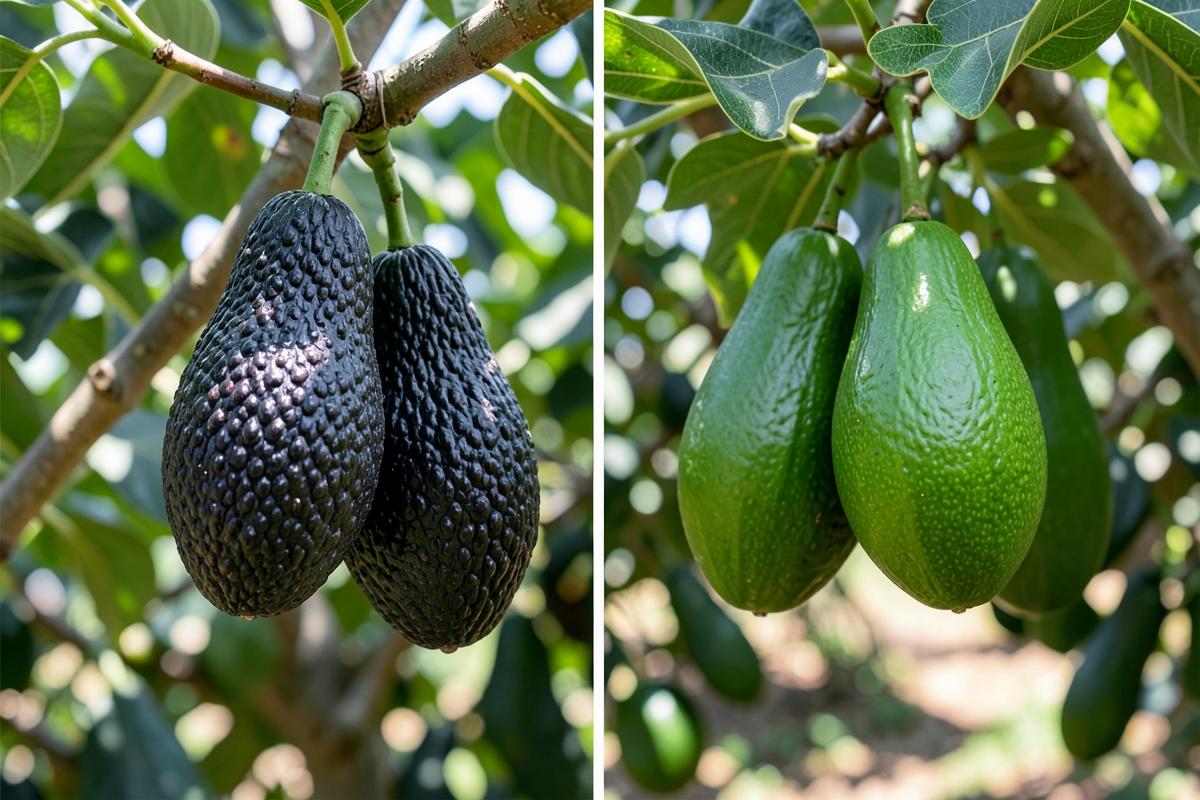
Hass-type dark pebbled fruit alongside smooth green-skinned varieties. Skin type is a variety trait, not a ripeness signal in every case.
Where Hass makes sense in India
Suitability by broad growing situation
Situation
Prospects for Hass
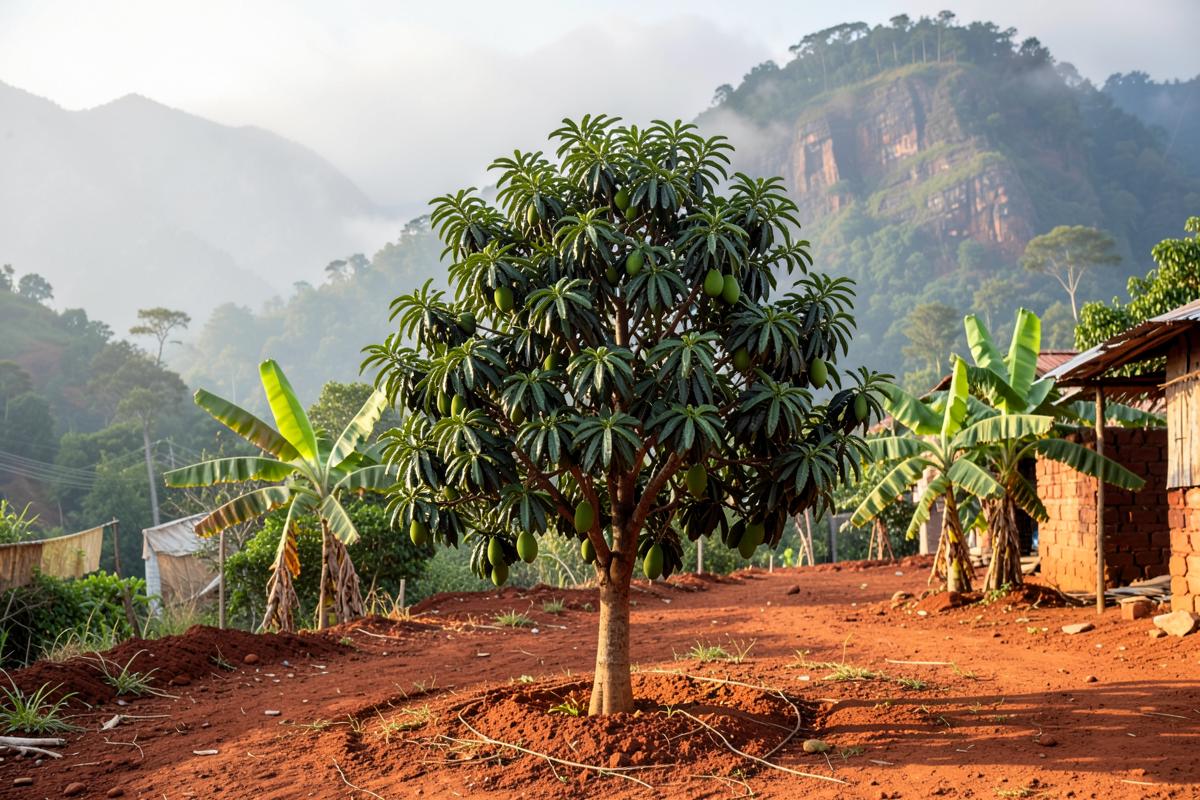
Western Ghats uplands (Kodagu, Wayanad, Nilgiris)
Best fit — elevation, mild temperatures, good slope drainage
Other frost-free hill areas with mild nights
Often workable; check local nursery experience
Warm humid coastal plains
Tree grows, but fruit quality and disease pressure are harder
Hot dry plains with 40 °C+ summers
Difficult; flower and fruit drop are common
Areas with winter frost
Not suitable without protection
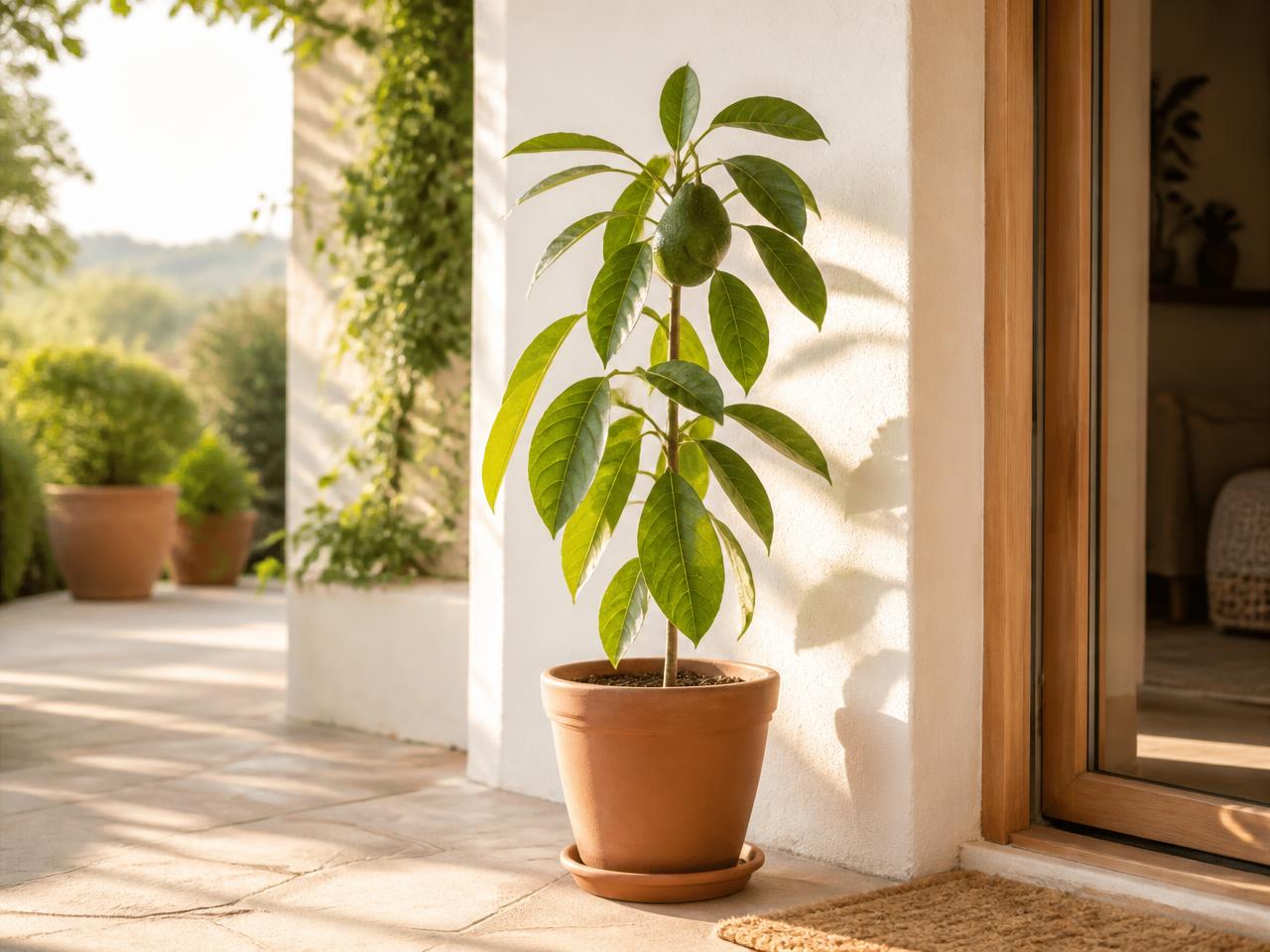
Terrace containers in mild cities
Possible with a grafted tree and diligent care; expect small crops
Western Ghats uplands (Kodagu, Wayanad, Nilgiris)
Prospects for Hass
Best fit — elevation, mild temperatures, good slope drainage
Other frost-free hill areas with mild nights
Prospects for Hass
Often workable; check local nursery experience
Warm humid coastal plains
Prospects for Hass
Tree grows, but fruit quality and disease pressure are harder
Hot dry plains with 40 °C+ summers
Prospects for Hass
Difficult; flower and fruit drop are common
Areas with winter frost
Prospects for Hass
Not suitable without protection
Terrace containers in mild cities
Prospects for Hass
Possible with a grafted tree and diligent care; expect small crops
We keep this deliberately general because district-level performance varies more than state-level generalisations suggest. Ask nurseries and growers near you what has actually fruited, not what is being sold.
Alternatives worth considering
Other varieties Indian growers encounter
Variety
Type
Why consider it
Fuerte
B
Somewhat more tolerant of cool spells; smooth green skin; good pollination partner for Hass
Pollock
—
Large, low-oil green fruit long grown in warm humid Indian conditions
Local Ghats seedling selections
Varies
Adapted to local conditions, widely available, variable fruit
ICAR-IIHR releases
Varies
Bred and selected with Indian conditions in view; availability is regional
Fuerte
Type
B
Why consider it
Somewhat more tolerant of cool spells; smooth green skin; good pollination partner for Hass
Pollock
Type
—
Why consider it
Large, low-oil green fruit long grown in warm humid Indian conditions
Local Ghats seedling selections
Type
Varies
Why consider it
Adapted to local conditions, widely available, variable fruit
ICAR-IIHR releases
Type
Varies
Why consider it
Bred and selected with Indian conditions in view; availability is regional
2Plant high on free-draining ground, or use a coarse container mix.
3Give it full sun and shelter from hot dry wind during flowering.
4Water deeply and consistently through flowering and early fruit set.
5Feed lightly and often; avoid heavy nitrogen.
6Prune lightly after harvest to keep the canopy open and pickable.
Fruiting expectations
A grafted Hass planted in a suitable location commonly begins bearing around three to four years after planting, with crops building over subsequent years and alternating between heavier and lighter seasons. In marginal climates it may flower without setting much fruit — an outcome worth anticipating before you plant, rather than diagnosing three years later. Container-grown trees in India generally take a little longer still; see growing avocado in pots in India.
Questions people also ask
Is Hass avocado suitable for Indian weather?
It suits mild, frost-free hill and upland climates such as the Western Ghats. In hot dry plains or areas with winter frost it is a difficult choice, even though the tree itself may survive.
Do I need two trees to grow Hass?
No. Hass can set fruit on its own. Because it is a Type A variety, a Type B partner such as Fuerte flowering at the same time generally improves fruit set.
Can I grow Hass from a supermarket avocado seed?
You can grow a tree, but it will not be Hass. Seedlings are genetically new individuals; only grafting reproduces a named variety.
How long does Hass take to fruit in India?
A grafted tree in a suitable location commonly bears around three to four years after planting, with the crop building over following seasons.
Which avocado variety is easiest to grow in India?
Locally adapted seedling selections and varieties long grown in your district are usually the least demanding. Ask nurseries what has fruited nearby rather than choosing by name recognition.
Sources we checked
Horticultural and nutritional claims on this page are drawn from these references.
We write from two places: published horticultural research from institutions such as ICAR-IIHR and the University of California, and what our partner farms actually observe growing avocado in Indian conditions. Where the evidence is thin or regional, we say so instead of rounding it into a confident answer.
Researched and written in-house, reviewed by our farm coordination team. Last reviewed 4 September 2026.
Still growing your avocado tree?
Our Knowledge Hub covers growing, care, varieties, grafting and fruiting in one place — and if you would rather start with an established tree, we can tell you honestly whether one will do well where you live.
Avocado is not native to India and does not suit every part of it. This guide is specific about the conditions the tree needs and how to work with Indian heat, monsoon and winter.
There is no single best variety for India, because India is not one climate. What matters is racial background, cold tolerance and how the tree handles your specific conditions.
A grafted tree is two plants working together: proven roots below, a known variety above. That combination is why orchards use them and why home growers should too.