In India
Best States for Growing Avocado in India
A careful, evidence-led look at where avocado actually does well in India — and an equally careful note about the regions widely claimed without support.
3 min read
A grounded look at avocado as an Indian crop: where it works, what establishment takes, and the risks nobody mentions in the enthusiastic articles.
On numbers
Avocado is a minor crop in Indian agricultural statistics and reliable yield, cost and income data is scarce. We deliberately do not publish per-acre yield or profit figures, because the numbers circulating online mostly cannot be traced to a verifiable source.
India imports a substantial and growing quantity of avocado. World Bank WITS data records imports of roughly 9.22 million kg, worth about USD 22.4 million, in 2024. Demand is being met largely from abroad, and that gap is what makes domestic cultivation interesting.
It is also what makes the enthusiasm dangerous. A demand gap is not the same as a viable orchard on your specific plot.
UC IPM identifies Phytophthora cinnamomi root rot as avocado's most serious disease, and it thrives in heavy, poorly drained soils. That single fact should dominate site selection.
| Criterion | What to look for | Deal-breaker? |
|---|---|---|
| Drainage | Free-draining soil, ideally on a slope | Yes. Nothing else compensates |
| Water availability | Reliable irrigation through dry periods | Effectively yes |
| Water quality | Low salinity — avocado is notably salt-sensitive | Often yes |
| Temperature | Warm without sustained extreme heat | Depends on variety and elevation |
| Frost | Little to none, unless growing hardier Mexican-race material | Depends on variety |
| Wind | Natural shelter or windbreaks | No, but plan for it |
| Access to planting material | Reliably grafted trees of known variety | No, but critical to yield |
Drainage
Water availability
Water quality
Temperature
Frost
Wind
Access to planting material
The soil pit test
Before committing land, dig pits across the plot, fill them twice with water and time the drainage. Slow drainage on the second fill means the site will produce root rot sooner or later.
Grafted trees of a known variety on suitable rootstock. Seedling orchards are not a serious commercial proposition — variable fruit, delayed bearing and no consistency for a buyer.
ICAR-IIHR has carried out avocado improvement work and released selections including Arka Coorg Ravi and Arka Supreme. Material developed and evaluated under Indian conditions is worth taking seriously against imported varieties selected for other climates.
Grafted plants begin bearing around three years after planting and continue producing for more than twenty. That is the shape of the investment: several years of cost before revenue, then a long productive run.
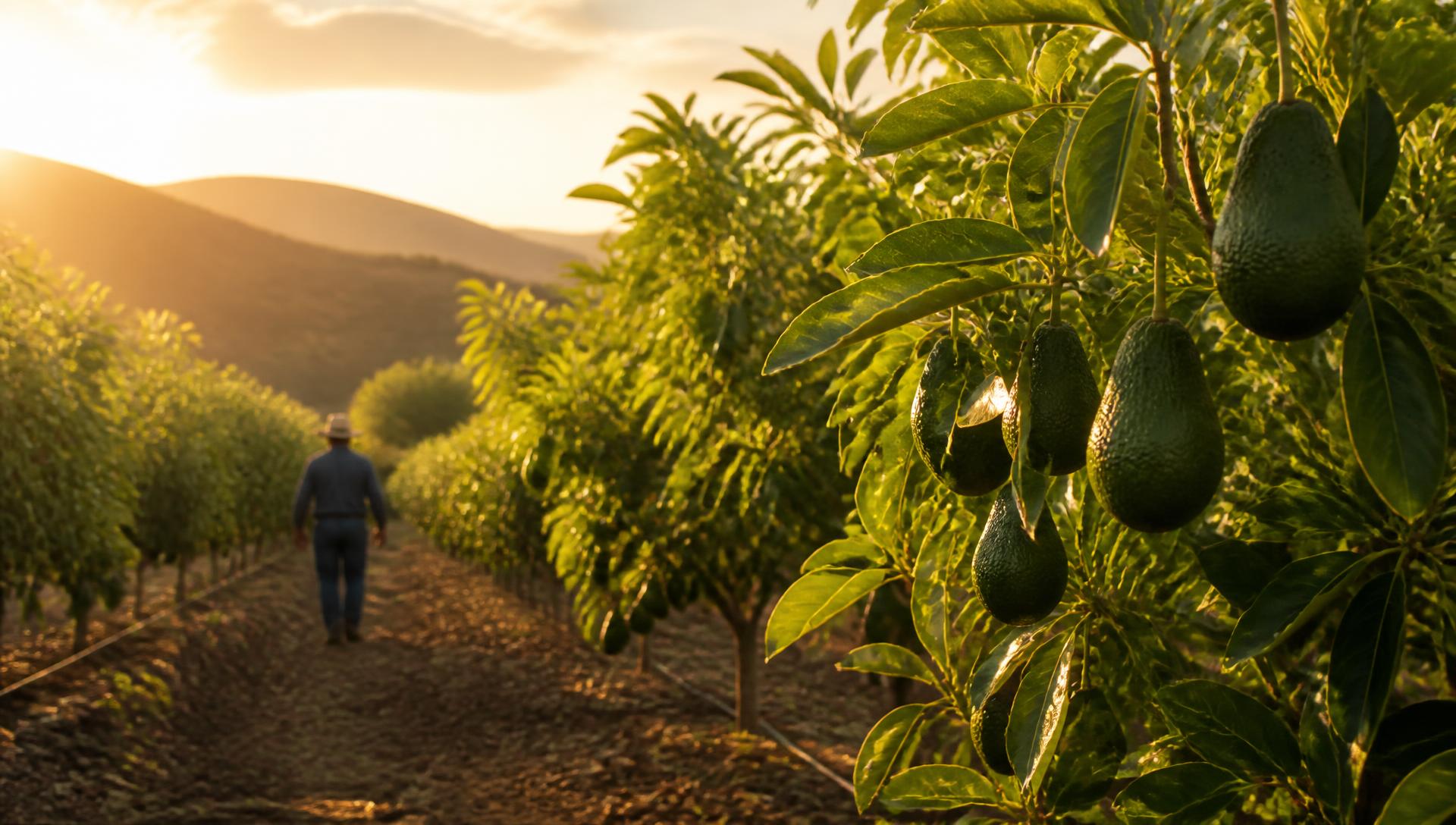
The best-documented cultivation is in Kodagu in Karnataka — where ICAR's Central Horticultural Experiment Station at Chettalli is located — and in Wayanad and the Kerala high ranges. The Tamil Nadu hills are climatically suitable with active growing. Himachal Pradesh represents genuine emerging interest at development stage.
Our state-by-state assessment covers this in detail, including the regions we decline to describe as established despite frequent online claims.
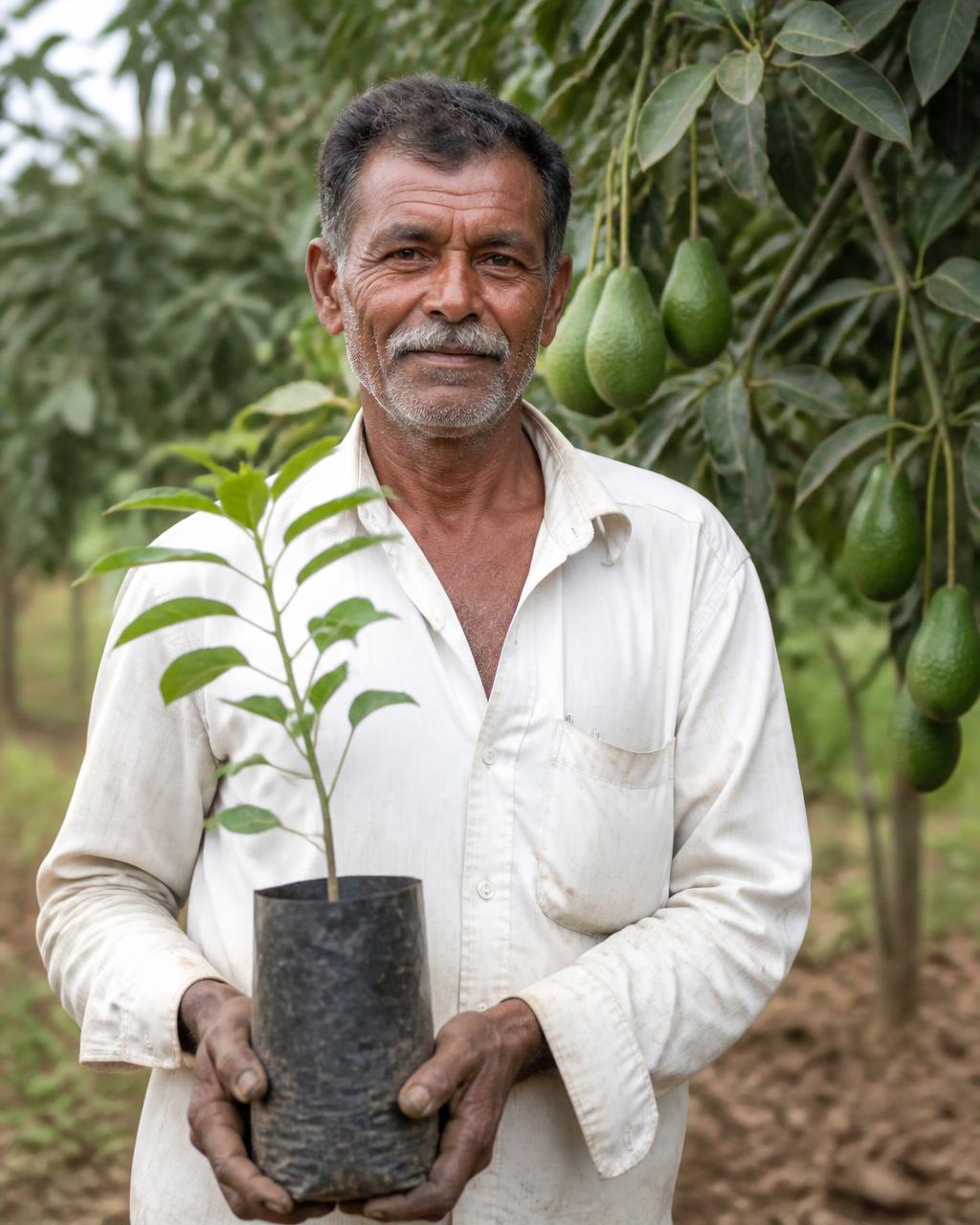
Our partner farms grow trees using natural farming practices, and rental gives them a demand stream that is not tied to a single fruit harvest window. A tree placed with a household earns across its growing life, not only when it fruits — which changes the economics of the waiting years.
Grafted trees typically begin bearing around three years after planting and remain productive for more than twenty. Plan for several years of cost before meaningful revenue.
Site drainage. Phytophthora root rot is avocado's most serious disease and thrives in heavy, poorly drained soil. No amount of subsequent management compensates for a badly chosen site.
It can be, given large and growing imports, but it depends on site suitability, variety, irrigation water quality, the years before bearing and access to a buyer. We do not publish per-acre income figures because reliable Indian data is scarce.
Most consistently in Kodagu (Coorg) in Karnataka and in Wayanad and the Kerala high ranges, with active cultivation in the Tamil Nadu hills and emerging interest in Himachal Pradesh.
Horticultural and nutritional claims on this page are drawn from these references.
We write from two places: published horticultural research from institutions such as ICAR-IIHR and the University of California, and what our partner farms actually observe growing avocado in Indian conditions. Where the evidence is thin or regional, we say so instead of rounding it into a confident answer.
Researched and written in-house, reviewed by our farm coordination team. Last reviewed 3 September 2026.
Our Knowledge Hub covers growing, care, varieties, grafting and fruiting in one place — and if you would rather start with an established tree, we can tell you honestly whether one will do well where you live.
Free calculators that turn this guide into a result for your own conditions.
Model investment, running cost, yield and margin across three scenarios.
Break down setup and annual costs per acre, per hectare and per tree.
Trees per acre, rows and layout for your spacing plan.
In India
A careful, evidence-led look at where avocado actually does well in India — and an equally careful note about the regions widely claimed without support.
3 min read
In India
Avocado grows in India, and has for decades in a few specific places. The honest answer is regional, and depends far more on drainage and heat than on latitude.
5 min read
Farming
Partner farmer, tree care, coordination, delivery, your home. Five links, and the whole model depends on the first one being real.
3 min read
Care
Most avocado problems come from four causes: water at the roots, salt, temperature stress, or a tree that is simply too young. Start here and narrow down.
4 min readStart here